

Hey there! As a supplier of Pvc Plastics, I often get asked about the elastic properties of these materials. So, I thought I'd take some time to break it down for you in this blog post.
First off, let's talk a bit about what PVC plastics are. PVC, or polyvinyl chloride, is a widely used plastic material. You can find it in all sorts of products, from pipes and cables to Pvc Panel Sheets and even some clothing items. It's known for its durability, versatility, and relatively low cost.
Now, when we're talking about the elastic properties of PVC plastics, we're mainly looking at how they respond to stress and strain. Elasticity is all about a material's ability to deform under stress and then return to its original shape once the stress is removed.
Young's Modulus of PVC Plastics
One of the key parameters to understand the elastic behavior of PVC plastics is Young's modulus. Young's modulus is a measure of the stiffness of a material. In simple terms, it tells us how much a material will stretch or compress when a force is applied to it.
For PVC plastics, the Young's modulus can vary depending on several factors, such as the type of PVC (rigid or flexible), the additives used, and the manufacturing process. Generally, rigid PVC has a higher Young's modulus compared to flexible PVC. Rigid PVC can have a Young's modulus in the range of 2000 - 4000 MPa, while flexible PVC typically has a much lower value, around 10 - 100 MPa.

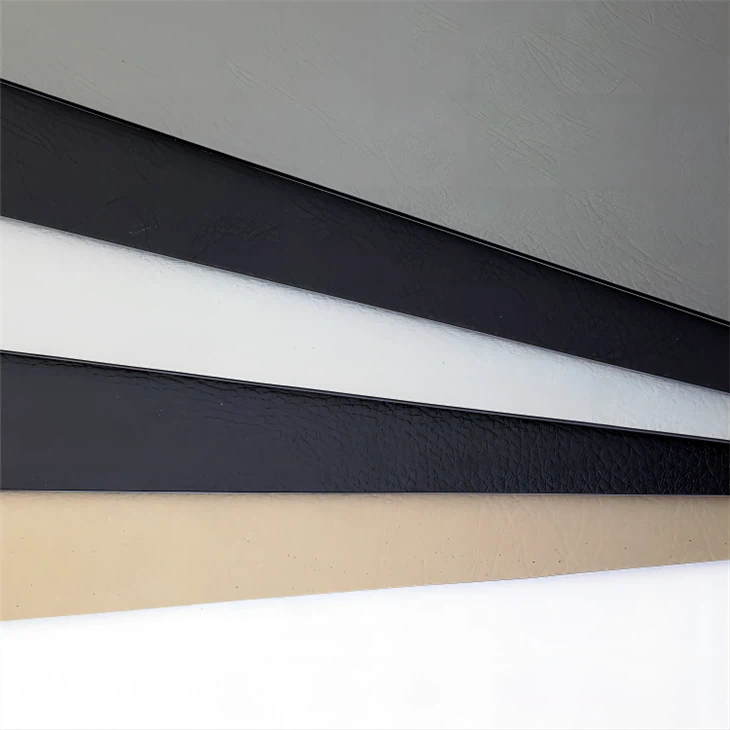
This difference in Young's modulus means that rigid PVC is stiffer and less likely to deform under a given load compared to flexible PVC. For example, if you have a Pvc Panel Sheet made of rigid PVC, it will maintain its shape better when you try to bend it slightly. On the other hand, a flexible PVC product, like a PVC hose, can be easily bent and will return to its original shape once the bending force is removed.
Poisson's Ratio
Another important elastic property is Poisson's ratio. Poisson's ratio describes the relationship between the lateral strain (the change in width or thickness) and the axial strain (the change in length) when a material is under stress.
For PVC plastics, Poisson's ratio is typically around 0.3 - 0.4. This means that when you stretch a PVC plastic in one direction, it will contract in the perpendicular directions. For instance, if you pull a PVC rod lengthwise, it will get thinner in diameter. The value of Poisson's ratio is important in applications where dimensional changes in multiple directions need to be considered, such as in the design of PVC pipes or Pvc Polycarbonate composites.
Yield Strength and Ultimate Tensile Strength
The yield strength and ultimate tensile strength are also crucial elastic properties. The yield strength is the point at which a material starts to deform plastically, meaning it won't fully return to its original shape after the stress is removed. The ultimate tensile strength is the maximum stress a material can withstand before it breaks.
Rigid PVC usually has a higher yield strength and ultimate tensile strength compared to flexible PVC. Rigid PVC can have a yield strength of around 40 - 60 MPa and an ultimate tensile strength of 50 - 80 MPa. Flexible PVC, on the other hand, has a lower yield strength, often in the range of 5 - 20 MPa, and an ultimate tensile strength of 10 - 30 MPa.
These properties are important when choosing the right PVC plastic for a particular application. If you need a material that can withstand high forces without deforming permanently, like in structural applications, rigid PVC would be a better choice. But if you need a material that can be easily stretched or bent, flexible PVC is the way to go.
Factors Affecting Elastic Properties
There are several factors that can affect the elastic properties of PVC plastics. One of the main factors is the temperature. As the temperature increases, the elastic modulus of PVC plastics decreases. This means that at higher temperatures, PVC becomes more flexible and less stiff. For example, a PVC pipe that is rigid at room temperature may become more pliable in hot weather.
The presence of additives also plays a significant role. Plasticizers are often added to PVC to make it more flexible. The more plasticizer is added, the lower the Young's modulus and the higher the flexibility of the PVC. Other additives, such as stabilizers and fillers, can also affect the elastic properties by altering the internal structure of the PVC.
The manufacturing process can also have an impact. For example, extrusion and injection molding can result in different molecular orientations in the PVC, which can affect its elastic behavior. Products made by extrusion may have different elastic properties compared to those made by injection molding.
Applications Based on Elastic Properties
The elastic properties of PVC plastics make them suitable for a wide range of applications. Rigid PVC, with its high stiffness and strength, is commonly used in construction for pipes, window frames, and Pvc Panel Sheets. These applications require a material that can maintain its shape and withstand external forces without significant deformation.
Flexible PVC, on the other hand, is used in applications where flexibility is key, such as in electrical insulation, medical tubing, and inflatable products. The ability of flexible PVC to stretch and return to its original shape makes it ideal for these types of applications.
Why Choose Our Pvc Plastics
As a supplier of Pvc Plastics, we offer a wide range of PVC products with different elastic properties to meet your specific needs. Whether you need rigid PVC for a structural project or flexible PVC for a more pliable application, we've got you covered.
Our PVC plastics are made using high - quality raw materials and advanced manufacturing processes. We ensure that our products have consistent and reliable elastic properties, so you can trust them for your projects.
If you're interested in learning more about our PVC plastics or have a specific requirement, we'd love to hear from you. Contact us to start a discussion about your procurement needs. We're here to help you find the perfect PVC solution for your application.
References
- "Plastic Materials" by J. A. Brydson
- "Polymer Science and Technology" by Charles A. Harper
So, there you have it! A comprehensive look at the elastic properties of PVC plastics. I hope this post has been helpful to you. If you have any questions or comments, feel free to leave them below.