

Hey there! As a supplier of PVC and ABS materials, I often get asked about how these two materials stack up against each other when it comes to weathering resistance over time. So, I thought I'd dive into this topic and share some insights based on my experience in the industry.
First off, let's talk a bit about what PVC and ABS are. PVC, or polyvinyl chloride, is a widely used plastic known for its versatility, durability, and affordability. You can find it in all sorts of products, from pipes and fittings to window frames and flooring. On the other hand, ABS, or acrylonitrile butadiene styrene, is a thermoplastic polymer that's valued for its strength, impact resistance, and aesthetic appeal. It's commonly used in automotive parts, electronic housings, and toys.
Now, when it comes to weathering resistance, both PVC and ABS have their own strengths and weaknesses. Weathering refers to the degradation of a material due to exposure to environmental factors such as sunlight, heat, moisture, and chemicals. Over time, these factors can cause a material to lose its physical and mechanical properties, change color, or become brittle.
Let's start with PVC. PVC has decent weathering resistance, especially when it's formulated with appropriate additives. One of the main advantages of PVC is its resistance to moisture. It doesn't absorb water easily, which means it won't swell or rot when exposed to rain or high humidity. This makes it a great choice for outdoor applications like siding, fencing, and decking.
However, PVC is more susceptible to UV degradation. When exposed to sunlight, the UV rays can break down the chemical bonds in PVC, causing it to become brittle and discolor. To combat this, manufacturers often add UV stabilizers to PVC formulations. These stabilizers help to absorb and dissipate the UV energy, protecting the PVC from damage. With the right additives, PVC can maintain its appearance and performance for many years in outdoor environments. You can check out more about Pvc Plastics and Pvc Hard Board on our website.
Now, let's turn our attention to ABS. ABS has good impact resistance and toughness, but its weathering resistance is not as good as PVC in some aspects. ABS is more prone to UV degradation than PVC. When exposed to sunlight, ABS can quickly lose its color and become yellowish or brittle. This is because the butadiene component in ABS is sensitive to UV radiation.
In addition, ABS has a relatively high water absorption rate compared to PVC. When it absorbs water, it can swell and lose its dimensional stability. This can be a problem for outdoor applications where the material is exposed to rain or high humidity. However, like PVC, ABS can also be formulated with additives to improve its weathering resistance. For example, adding UV stabilizers and antioxidants can help to protect ABS from UV damage and oxidation.

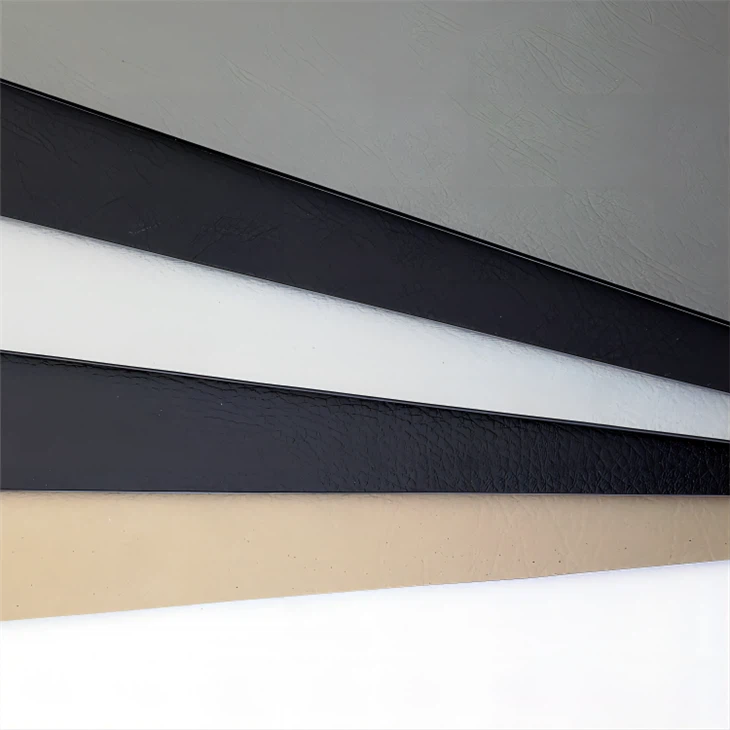
Over time, the weathering performance of both PVC and ABS will depend on several factors, including the quality of the material, the formulation, the exposure conditions, and the presence of additives. In general, PVC tends to have better long - term weathering resistance in outdoor applications, especially in areas with high humidity and intense sunlight.
Let's take a look at some real - world examples. Suppose you're considering using PVC or ABS for an outdoor sign. A PVC sign will likely last longer and maintain its color and shape better over time, especially if it's properly formulated with UV stabilizers. On the other hand, an ABS sign might start to show signs of degradation, such as color fading and brittleness, after a few years of exposure to the elements.
Another example is in the construction industry. PVC pipes are commonly used for outdoor plumbing because of their excellent moisture resistance and long - term durability. ABS pipes, while they have good impact resistance, are not as commonly used for outdoor applications due to their lower weathering resistance.
When it comes to choosing between PVC and ABS for a specific application, it's important to consider the environmental conditions and the expected lifespan of the product. If you need a material that can withstand harsh outdoor conditions for a long time, PVC might be the better choice. However, if impact resistance and aesthetic appeal are more important, and the product will be used indoors or in a protected environment, ABS could be a suitable option.
As a PVC and ABS supplier, I've seen firsthand how these materials perform in different applications. We offer a wide range of PVC and ABS products, including PVC ABS blends, that are formulated to meet various customer needs. Our team of experts can help you select the right material based on your specific requirements.
If you're in the market for PVC or ABS materials, I encourage you to reach out to us. We can provide you with samples, technical data, and pricing information. Whether you're a small business looking for a cost - effective solution or a large corporation in need of high - quality materials, we're here to help. Let's have a chat and see how we can work together to meet your material needs.
In conclusion, while both PVC and ABS have their unique properties, PVC generally has better weathering resistance over time, especially in outdoor applications. But with the right formulation and additives, ABS can also be a viable option for certain applications. If you have any questions or need more information, don't hesitate to contact us. We're always happy to assist you.
References
- "Plastics in Construction: A Guide to Specification and Use" by Tony Hunt
- "Polymer Science and Technology" by Dominick V. Rosato