

As a dedicated supplier of Black ABS sheets, I often encounter various technical inquiries from our clients. One question that frequently arises is about the dielectric constant of Black ABS sheets. In this blog post, I aim to provide a comprehensive understanding of the dielectric constant of Black ABS sheets, its significance, and how it relates to the applications of our products.
Understanding ABS and Black ABS Sheets
Before delving into the dielectric constant, let's first understand what ABS (Acrylonitrile Butadiene Styrene) is. ABS is a common thermoplastic polymer known for its high impact resistance, toughness, and good mechanical properties. It is a terpolymer made by polymerizing styrene and acrylonitrile in the presence of polybutadiene. This unique combination of monomers gives ABS its desirable characteristics, making it suitable for a wide range of applications in different industries.
Black ABS sheets are simply ABS sheets that have been pigmented black. The addition of black pigment does not significantly alter the fundamental properties of ABS but provides an aesthetically pleasing appearance, which is often required in many applications. These sheets are widely used in industries such as automotive, electronics, and consumer goods due to their durability, ease of processing, and attractive black color.
What is the Dielectric Constant?
The dielectric constant, also known as the relative permittivity, is a measure of a material's ability to store electrical energy in an electric field. It is defined as the ratio of the capacitance of a capacitor with the material as the dielectric to the capacitance of the same capacitor with a vacuum as the dielectric. In simpler terms, it indicates how much a material can polarize in response to an applied electric field.
The dielectric constant is a dimensionless quantity and is typically denoted by the symbol εr. A higher dielectric constant means that the material can store more electrical energy per unit volume in an electric field. This property is crucial in applications where electrical insulation or energy storage is required.
Dielectric Constant of Black ABS Sheets
The dielectric constant of Black ABS sheets is generally in the range of 2.4 - 3.2 at room temperature and at a frequency of 1 MHz. This value is relatively low compared to some other materials, which makes Black ABS sheets a good electrical insulator. The low dielectric constant indicates that Black ABS sheets do not easily polarize in an electric field, and thus, they can effectively prevent the flow of electric current through them.
It's important to note that the dielectric constant of Black ABS sheets can be affected by several factors, including temperature, frequency, and the presence of additives or impurities. For example, as the temperature increases, the dielectric constant of Black ABS sheets may also increase slightly. Similarly, at higher frequencies, the dielectric constant may decrease due to the reduced ability of the material to polarize rapidly.
Significance of the Dielectric Constant in Applications
The dielectric constant of Black ABS sheets plays a crucial role in many of its applications. Here are some examples:
Electronics
In the electronics industry, Black ABS sheets are commonly used as insulators in electronic devices. Their low dielectric constant ensures that they can effectively isolate electrical components and prevent electrical interference. For instance, in printed circuit boards (PCBs), Black ABS sheets can be used as a substrate to support the circuit traces and provide electrical insulation between different layers of the board.
Automotive
In the automotive industry, Black ABS sheets are used in various applications, such as interior trim parts and dashboard components. The low dielectric constant of these sheets is beneficial in reducing electromagnetic interference (EMI) in the vehicle's electrical systems. This helps to ensure the proper functioning of electronic devices in the car, such as radios, navigation systems, and sensors.
Consumer Goods
Black ABS sheets are also widely used in the production of consumer goods, such as appliances, toys, and furniture. Their electrical insulation properties, as indicated by the low dielectric constant, make them a safe choice for these products. For example, in household appliances, Black ABS sheets can be used to enclose electrical components and prevent electrical shocks to the users.
Our Black ABS Sheets and Their Advantages
As a supplier of Black ABS sheets, we take pride in offering high-quality products that meet the strictest industry standards. Our Black ABS sheets are manufactured using advanced processes and high-quality raw materials to ensure consistent dielectric properties and other mechanical and physical characteristics.
One of the key advantages of our Black ABS sheets is their excellent electrical insulation performance, as reflected by their stable dielectric constant. This makes them suitable for a wide range of applications where electrical safety and reliability are of utmost importance.
In addition to their electrical properties, our Black ABS sheets also offer other benefits, such as high impact resistance, good chemical resistance, and easy processing. They can be easily cut, drilled, bent, and thermoformed to meet the specific requirements of our clients.

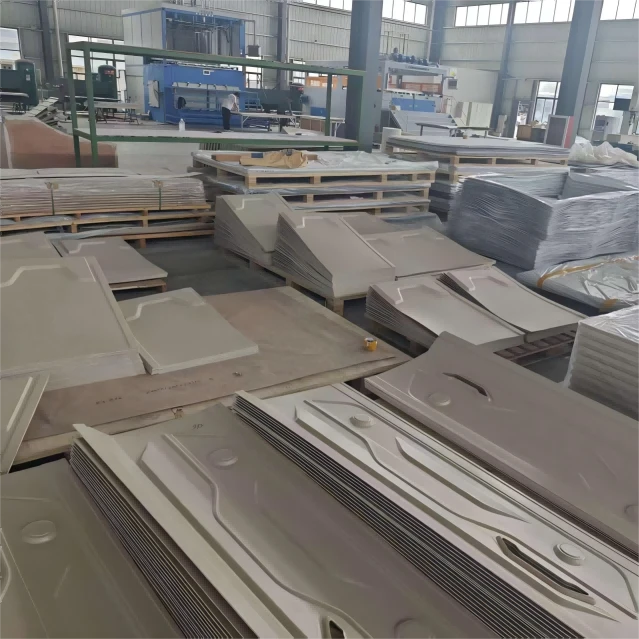
Related Products
If you are interested in exploring other types of ABS sheets, we also offer a variety of related products, including Automotive ABS Sheet, Custom Thermoforming ABS Plastic Sheets, and Smooth ABS Sheet. These products are designed to meet the diverse needs of different industries and applications.
Contact Us for Procurement
If you have any questions about the dielectric constant of Black ABS sheets or are interested in purchasing our products, please feel free to contact us. Our team of experts is always ready to provide you with detailed information and assist you in finding the right solution for your specific requirements. Whether you need a small quantity for a prototype or a large volume for mass production, we can offer you competitive prices and reliable delivery.
References
- "Plastics Engineering Handbook of the Society of Plastics Engineers" by Myer Kutz
- "Introduction to Polymers" by Young and Lovell