


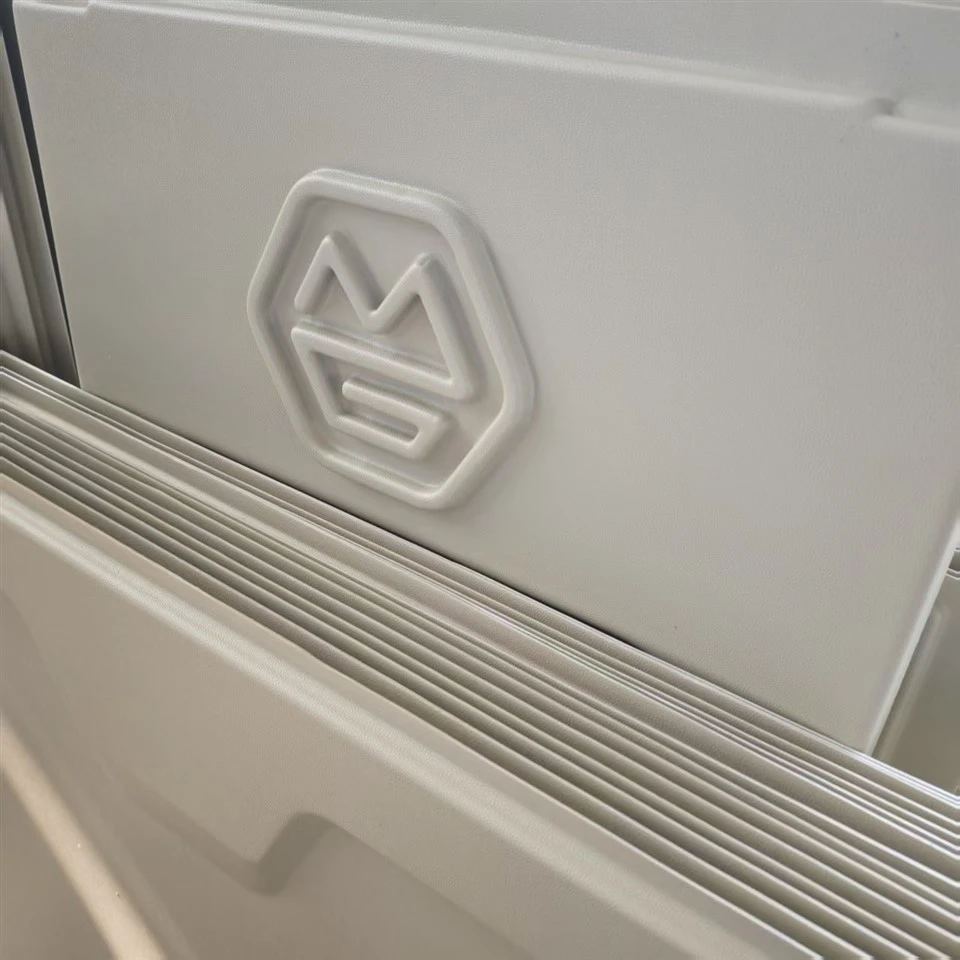
Thermoplastic sheets are the fundamental building blocks of the versatile and cost-effective vacuum forming process. Understanding the right materials and the process itself is key to unlocking its potential for your projects. As a leading plastic sheet manufacturer with integrated vacuum forming capabilities, we provide both the material and the expertise you need.
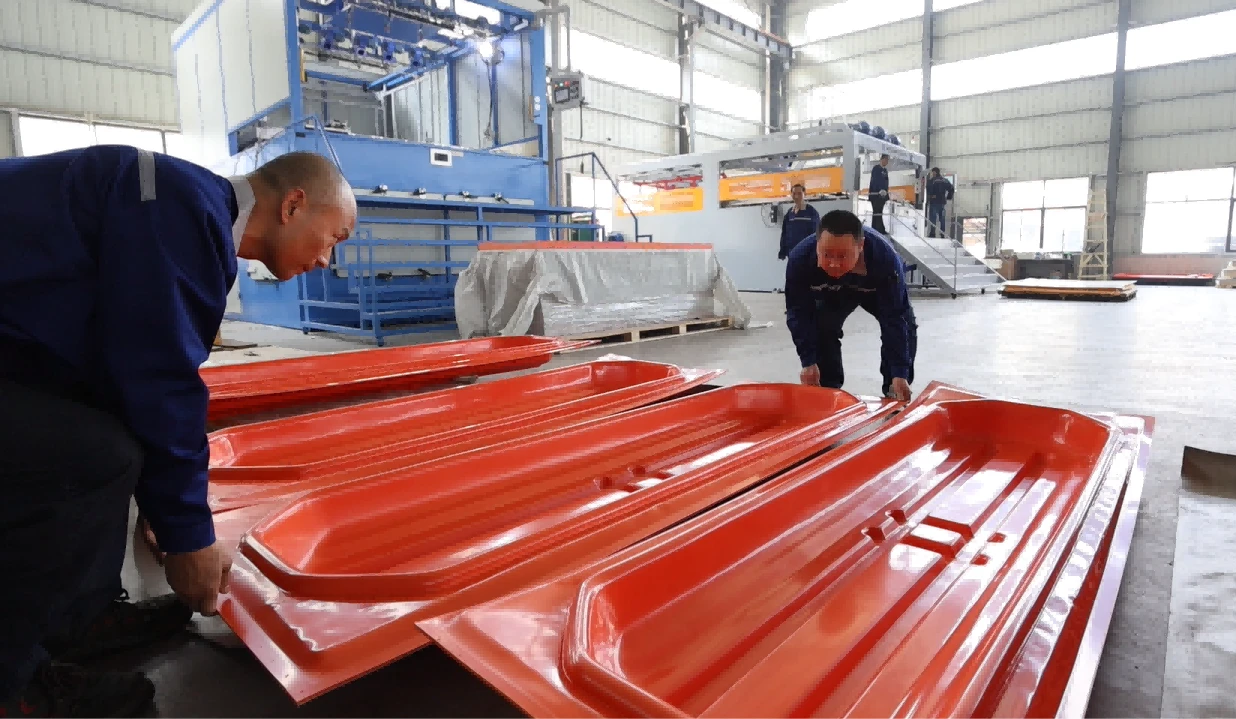
Vacuum Forming Process
Vacuum forming is a simplified thermoforming technique where a heated thermoplastic sheet is shaped using vacuum pressure. Here's how it works:
Heating: A flat thermoplastic sheet is securely clamped in a frame and uniformly heated until it becomes soft and pliable (reaching its forming temperature).
Forming: The heated sheet is quickly positioned over a mold (pattern, buck, or tool). A powerful vacuum pump activates, sucking the air out from between the sheet and the mold. Atmospheric pressure (approx. 14.7 psi) then pushes the softened sheet tightly down onto the mold surface, conforming precisely to its shape and details.
Cooling & Trimming: Once formed, the plastic is allowed to cool and solidify while still on the mold. After cooling, the formed part is removed from the mold, and excess material (flash) is trimmed away, resulting in the final product.
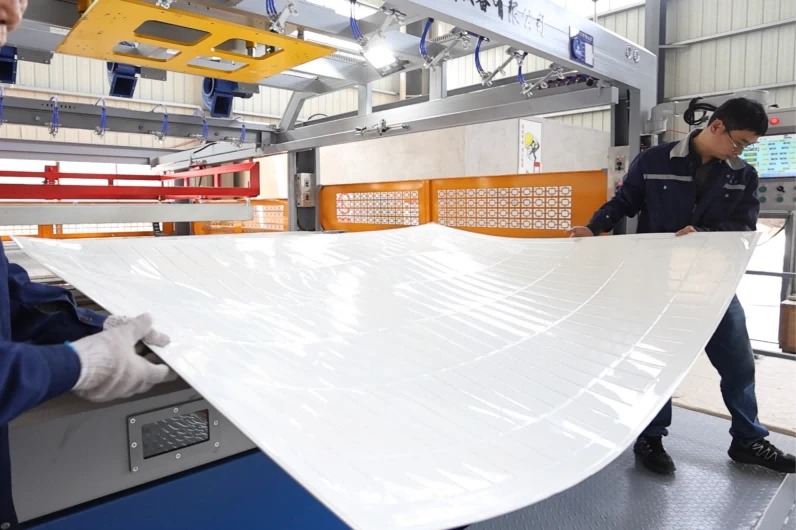
Thermoplastics are uniquely suited for vacuum forming due to their inherent properties:
Reversible Melting: They soften when heated and solidify when cooled, allowing them to be reshaped multiple times without significant chemical degradation (within process limits).
Formability: When heated to the correct temperature, they become pliable enough to be stretched and drawn by vacuum pressure over molds.
Material Variety: A wide array of thermoplastics offer properties like impact resistance, clarity, chemical resistance, UV stability, and food-grade compliance, suiting diverse end-use requirements.
Why Choose Vacuum Forming?
Vacuum forming offers significant advantages for a wide range of applications:
Cost-Effective Tooling: Molds (especially for prototypes and short runs) are significantly cheaper than those needed for injection molding, often made from wood, resin, or aluminum.
Fast Prototyping & Production: Ideal for rapid prototyping and low-to-medium volume production runs due to quicker mold fabrication and cycle times.
Design Flexibility: Allows for the creation of large, relatively simple to moderately complex parts with good detail reproduction.
Material Versatility: Compatible with a broad range of thermoplastic sheet materials offering different properties.
Efficiency: Relatively low energy consumption compared to other forming processes.
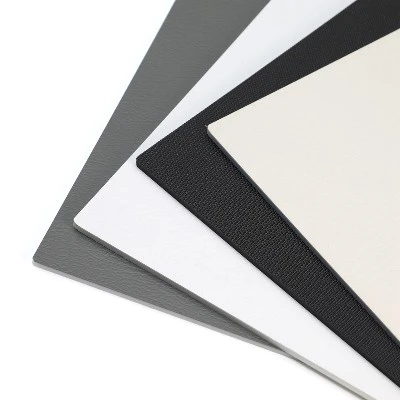


Popular Thermoplastic Sheets for Vacuum Forming
Choosing the right sheet material depends on the part's function, environment, and required properties. Common options include:
ABS (Acrylonitrile Butadiene Styrene): The most highly recommended general-purpose material. Offers an excellent balance of strength, impact resistance, rigidity, good forming characteristics, surface finish, and affordability. Ideal for automotive parts, enclosures, prototypes, consumer goods, and more.
HIPS (High Impact Polystyrene): Economical, easy to form, good stiffness and impact strength. Often used for packaging, disposable items, and point-of-purchase displays. Less chemical resistant than ABS.
PVC (Polyvinyl Chloride): Available rigid or flexible. Offers good chemical resistance, flame retardancy (specific grades), and clarity (clear grades). Used for trays, clamshells, and medical applications.
Polycarbonate (PC): Exceptional impact resistance, clarity, and high heat resistance. Used for demanding applications like safety shields, machine guards, and light covers. Requires higher forming temperatures.
Polypropylene (PP): Good chemical resistance, fatigue resistance, and FDA compliance. Used for living hinges (e.g., lunch box lids), containers, and medical parts. Can be trickier to form consistently due to its lower melt strength.


Jiangsu Compound isn't just a supplier; we're your comprehensive solution provider for vacuum forming projects.
Premium Thermoplastic Sheets: We manufacture and supply high-quality thermoplastic sheets specifically optimized for vacuum forming, including our top-recommended ABS sheets, HIPS, PVC, PETG, PC, PP, and more, in various thicknesses, colors, and finishes.
Integrated Vacuum Forming Expertise: We operate our own advanced vacuum forming equipment. This gives us deep process knowledge and allows us to offer seamless service from material selection to finished part.
End-to-End Service: From prototype development using our sheets to full-scale production runs, we handle the entire process. Our team works closely with you to select the optimal material (like cost-effective, high-performance ABS) and process parameters for your specific part requirements.
Quality & Reliability: As both the material producer and the former, we maintain strict quality control throughout the entire chain, ensuring consistent, reliable parts.
Hot Tags: thermoplastic sheets for vacuum forming, China thermoplastic sheets for vacuum forming manufacturers, suppliers, factory, 1mm abs plastic sheet, abs clear plastic sheet, abs white plastic sheet, Black ABS Sheet, grey abs plastic sheet, White ABS Sheet