


Choosing the right manufacturing process is critical for the success of your product. Two popular methods for creating large, non-metal parts are ABS Vacuum Forming and Fiberglass (FRP) fabrication. While they can sometimes produce similar-looking parts, they are fundamentally different in cost, materials, and application.
This guide provides a clear, head-to-head comparison.
Executive Summary: At a Glance
| Feature | ABS Vacuum Forming | Fiberglass (FRP) |
|---|---|---|
| Process Type | Thermoforming (Physical change) | Composite Lay-up (Chemical change) |
| Primary Cost Driver | Tooling (Mold) Cost | Labor Intensity |
| Best For Volumes | Medium to High (100s to 10,000s+ units) | Low to Medium (1 to 100s of units) |
| Strength | Good impact resistance; Not a structural material | Very High; Can be used for structural components |
| Surface Finish | Excellent straight from the mold | Requires significant post-processing (sanding, filling) |
| Production Speed | Fast cycle time (minutes per part) | Slow cure time (hours per part) |
1. Price & Cost Structure Comparison
| Cost Factor | ABS Vacuum Forming | Fiberglass (FRP) |
|---|---|---|
| Tooling / Mold Cost | Low to Medium. Molds can be made from wood or resin for prototypes, and aluminum for production. This is a major advantage for reducing upfront investment. | Medium to High. Requires a high-quality "plug" or "master" to create the final mold. The mold itself is then made from FRP, which is a labor-intensive process. |
| Part Cost (Per Unit) | Low at high volumes. Once the mold is paid for, the per-part cost drops significantly due to fast, automated cycles. Ideal for scaling. | High at high volumes. Cost does not decrease linearly as each part still requires similar labor and material. Becomes economically unviable for very large runs. |
| Labor Cost | Low. The process is highly automated. One operator can manage a machine, with labor mainly for loading/unloading and trimming. | Very High. The process is almost entirely manual (cutting, rolling, laying, resin application). Skilled labor is required, and it is time-consuming. |
| Economical Production Volume | Excellent for Medium & High Volumes. The low per-part cost and fast cycles make it ideal for production runs of hundreds to tens of thousands of units. | Excellent for Low Volumes & Prototypes. Lower initial tooling cost for one-off parts, but cost per part remains high. Best for batches of 1 to 100s of units. |
Cost Verdict: Choose ABS Vacuum Forming for cost-effective mass production. Choose Fiberglass when your volume is too low to justify the tooling cost for vacuum forming, or when you need a single, very large, strong part.
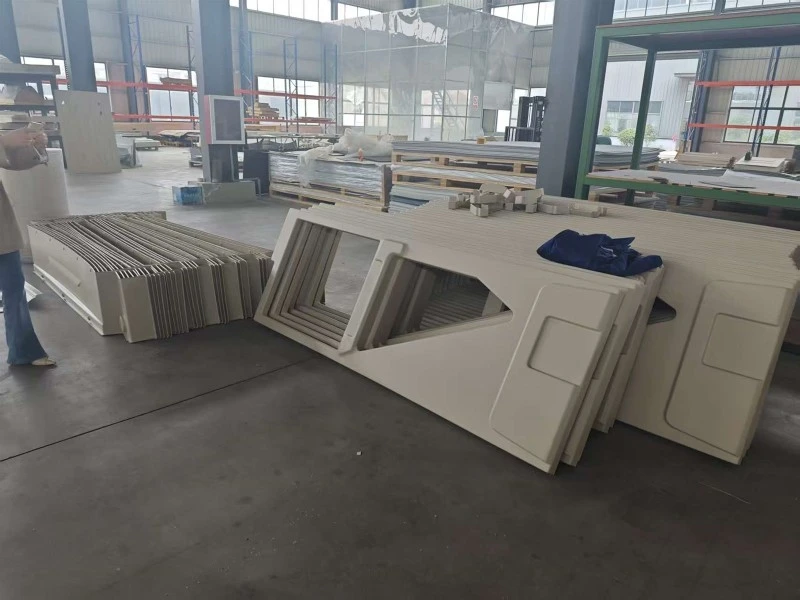
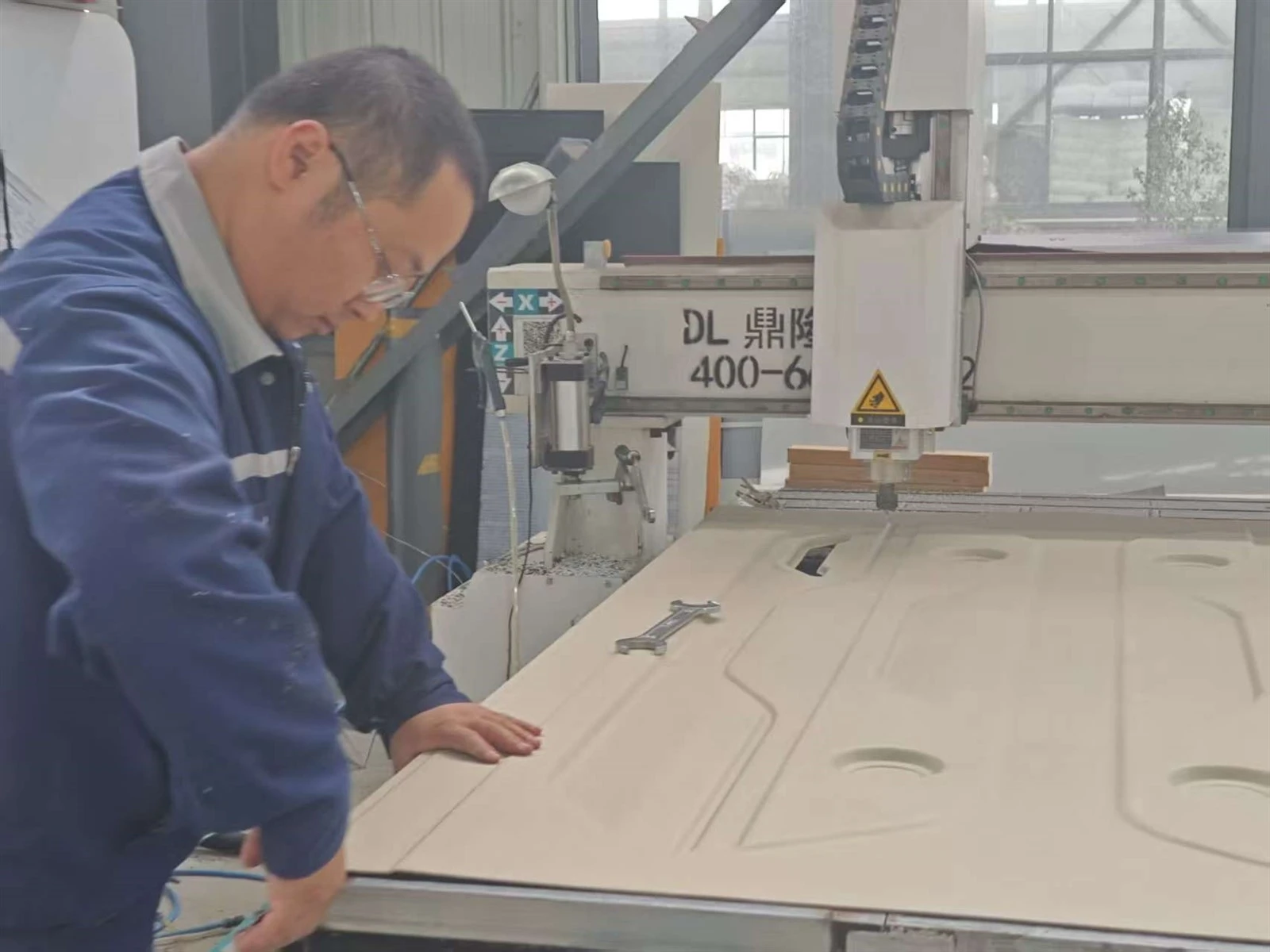
2. Material Comparison
| Material Factor | ABS Vacuum Forming | Fiberglass (FRP) |
|---|---|---|
| Base Material | ABS Plastic Sheet. A uniform, pre-manufactured thermoplastic sheet. | Liquid Resin & Glass Fibers. A composite system involving a thermosetting resin (like polyester or epoxy) and reinforcing fibers (mat, cloth). |
| Key Material Properties | - High Impact Resistance - Good Stiffness - Good Heat Resistance - Excellent Surface Finish - Recyclable |
- Very High Strength-to-Weight Ratio - Exceptional Stiffness - Can be Engineered (by changing fiber type/orientation) - Excellent Chemical & Weather Resistance (with right resin) |
| Material Consistency | Very High. Every part is made from a uniform, quality-controlled sheet of ABS. | Variable. Quality depends on the skill of the laminator. Resin-to-fiber ratio and air bubbles can vary, affecting part strength and weight. |
| Post-Processing | Easy to paint, glue, and thermoform. Can also be chrome-plated. | Requires extensive surface preparation (sanding, applying filler) before painting. Parts can be easily drilled and cut. |
| Environmental Impact | Better. Thermoplastic waste can be ground and recycled. The process involves heating, not chemical fumes. | Worse. Thermoset plastics are not recyclable. The process involves volatile organic compounds (VOCs) from the resin, requiring proper ventilation and safety gear. |
Material Verdict: Choose ABS for a tough, consistent, and aesthetically superior part that is easy to finish. Choose Fiberglass when you need maximum strength, rigidity, and the ability to customize material properties.
3. Process & Manufacturing Comparison
| Process Factor | ABS Vacuum Forming | Fiberglass (FRP) |
|---|---|---|
| Process Description | 1. A flat ABS sheet is heated until soft and pliable. 2. It is draped over a mold. 3. A vacuum sucks the air out, pulling the sheet into the mold's shape. 4. The part cools and is removed and trimmed. |
1. A release agent is applied to the mold. 2. Layers of fiberglass mat/cloth are placed in the mold. 3. Liquid resin is brushed, rolled, or sprayed to saturate the fibers. 4. The part cures (hardens) chemically. 5. The part is de-molded and trimmed. |
| Design Freedom | Limited by "Draw Ratios". The process is best for parts with gentle contours. Deep draws can cause wall thickness variation (thinning). Draft angles are required. | Extremely High. Can create virtually any shape, including complex curves, deep ribs, and undercuts. Ideal for large, single-piece structures. |
| Part Consistency | Excellent. Every part is an exact replica of the mold, ensuring high repeatability and quality control. | Fair to Good. Highly dependent on worker skill. Voids, dry spots, and resin-rich areas can occur, leading to variations. |
| Production Speed | Fast. Cycle times are typically 2-10 minutes. The process is easily automated for high-volume output. | Slow. Lay-up and cure times can take several hours to days per part, depending on size and resin system. |
Process Verdict: Choose ABS Vacuum Forming for a fast, repeatable, and scalable manufacturing process. Choose Fiberglass when your design is too large or geometrically complex for vacuum forming, and when production speed is not the primary concern.
Conclusion: How to Choose
You should choose ABS Vacuum Forming when your project requires:
Medium to High Production Volumes (e.g., automotive interiors, appliance cabinets, product housings).
A High-Quality, Class "A" Surface Finish right out of the mold.
Low Per-Part Cost at scale.
Fast Production Lead Times and consistent part quality.
A good balance of toughness and stiffness, but not primary structural strength.
You should choose Fiberglass (FRP) when your project requires:
Low Volume or One-Off Parts (e.g., custom car body kits, boat hulls, architectural features, prototypes).
Very High Strength and Rigidity; the part is a structural component.
Extreme Design Freedom with complex shapes and deep sections.
Very Large Parts that exceed the bed size of vacuum forming machines.
Specific chemical or weather resistance properties offered by specialized resins.