

When it comes to ABS plastic boards, understanding the tolerance range for their dimensions is crucial for both manufacturers and end - users. As a supplier of ABS plastic boards, I've been involved in numerous discussions and projects where the precision of these dimensions can make or break a product. In this blog, we'll explore what the tolerance range for the dimensions of ABS plastic boards is and why it matters.
Understanding ABS Plastic Boards
ABS, or Acrylonitrile Butadiene Styrene, is a popular thermoplastic polymer known for its strength, toughness, and good impact resistance. It is widely used in various industries, from automotive parts to consumer electronics, toys, and construction. The versatility of ABS plastic boards is one of the reasons why the demand for them is so high.
Importance of Dimension Tolerance
Dimension tolerance refers to the allowable variation in the size of a product. In the case of ABS plastic boards, it includes factors such as thickness, length, width, and flatness. Maintaining the right dimension tolerance is essential for several reasons.
First, it ensures that the ABS plastic boards fit properly into the intended application. For example, if you're using Abs Sheet For Vacuum Forming to create a custom - shaped part, any deviation in the board's thickness or flatness can lead to issues during the vacuum - forming process. The part may not form correctly, or it may have structural weaknesses.
Second, dimension tolerance affects the overall quality and appearance of the final product. In industries where aesthetics are important, such as consumer electronics or interior design, even a slight variation in the dimensions of the ABS plastic board can be noticeable and may affect the product's marketability.
Factors Affecting Dimension Tolerance
Several factors can influence the dimension tolerance of ABS plastic boards:
Manufacturing Process
The method used to produce ABS plastic boards plays a significant role. Extrusion is one of the most common manufacturing processes for ABS boards. During extrusion, the molten plastic is forced through a die to form a continuous sheet. The precision of the extrusion equipment, the stability of the temperature and pressure during the process, and the speed of the extrusion all affect the final dimensions of the board. If the temperature fluctuates too much, for example, the plastic may expand or contract unevenly, leading to variations in thickness or width.

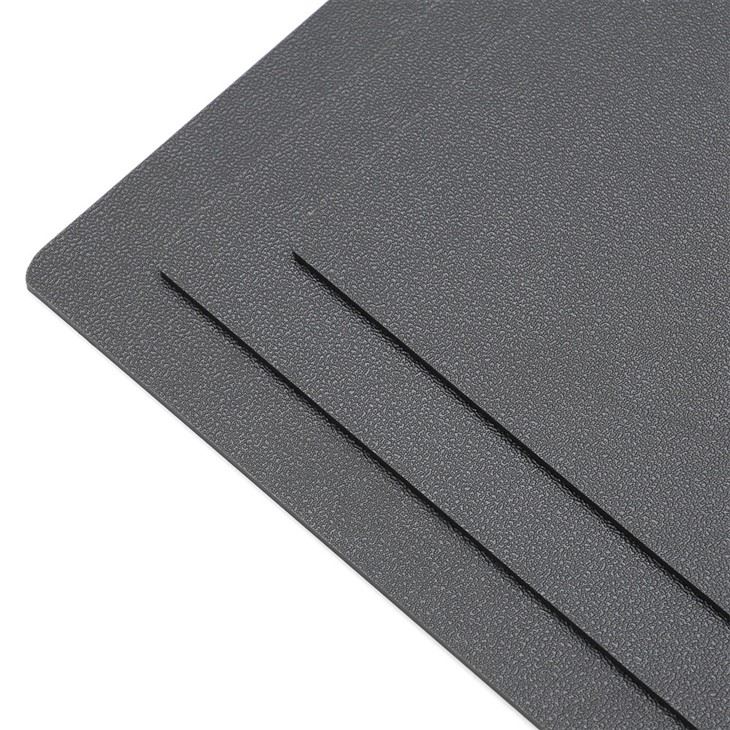
Material Properties
The inherent properties of the ABS material itself also matter. ABS is a thermoplastic, which means its physical properties can change with temperature. Different grades of ABS may have slightly different coefficients of thermal expansion, which can cause the board to expand or contract as it is heated or cooled. This can affect the dimensions of the board, especially in applications where the board is exposed to temperature variations.
Handling and Storage
How the ABS plastic boards are handled and stored can impact their dimensions. If the boards are stacked incorrectly or stored in an environment with high humidity or extreme temperatures, they may warp or bend, leading to deviations from the specified dimensions.
Typical Tolerance Ranges
Thickness
The thickness tolerance of ABS plastic boards is one of the most critical dimensions. For general - purpose ABS boards, the thickness tolerance can typically range from ±0.05 mm for thinner boards (less than 3 mm) to ±0.1 mm for thicker boards (3 - 10 mm). In some high - precision applications, such as the production of electronic components, even tighter tolerances may be required. For example, 1mm ABS Plastic Sheet may need to have a thickness tolerance of ±0.03 mm to ensure proper fit and function.
Length and Width
The length and width tolerances of ABS plastic boards are usually less critical than the thickness tolerance but still need to be within an acceptable range. For standard - size ABS boards, the length and width tolerances can range from ±1 - 3 mm. However, for custom - cut boards, the tolerances can be adjusted according to the customer's requirements.
Flatness
Flatness is another important dimension for ABS plastic boards, especially in applications where the board needs to be mounted or bonded to a surface. The flatness tolerance is typically expressed as the maximum deviation from a perfectly flat surface over a given length or area. For most ABS plastic boards, the flatness tolerance can range from 0.2 - 0.5 mm per meter.
Quality Control Measures
As a supplier, we implement strict quality control measures to ensure that our ABS plastic boards meet the specified dimension tolerances. We use advanced measuring equipment, such as calipers, micrometers, and laser scanners, to measure the thickness, length, width, and flatness of the boards at various stages of the manufacturing process.
In addition to in - process inspections, we also conduct final inspections on the finished products. Each batch of ABS plastic boards is randomly sampled and tested to ensure that it meets our quality standards. If any boards are found to be out of tolerance, they are either reworked or rejected.
Meeting Customer Requirements
We understand that different customers may have different requirements for the dimension tolerances of ABS plastic boards. Some customers may need boards with extremely tight tolerances for high - precision applications, while others may be more flexible.
That's why we work closely with our customers to understand their specific needs. We offer a range of standard products with different tolerance levels, and we also have the capability to produce custom - made ABS plastic boards to meet the most demanding requirements. For example, if you need Black ABS Haircell with a specific thickness tolerance, we can adjust our manufacturing process to ensure that the boards meet your specifications.
Applications and Tolerance
The required tolerance for ABS plastic board dimensions varies depending on the application. In the automotive industry, where parts need to fit precisely together, tight tolerances are often required. For example, dashboard components made from ABS plastic boards need to have very accurate dimensions to ensure a proper fit and a seamless appearance.
In the toy industry, on the other hand, the tolerance requirements may be slightly more relaxed. Toys typically do not require the same level of precision as automotive or electronic components, but still, the dimensions need to be within a reasonable range to ensure functionality and safety.
Contact for Purchase and Discussion
If you have any questions about the dimension tolerances of ABS plastic boards or if you're interested in purchasing our products, we'd love to hear from you. Our team of experts can provide you with detailed information about our products and help you choose the right ABS plastic boards for your application. We are committed to providing high - quality products and excellent customer service. Whether you need a small quantity for a prototype or a large - scale production order, we can meet your needs.
References
- "Plastics Engineering Handbook", Third Edition, by Myer Kutz
- "Thermoplastics: Properties and Applications", by Christopher Hall